 Clothing
 Motorcycle parts
 Scooter / Chinese ATV parts
 Mini car parts
 Water transport parts
 Bicycle / Kick scooter parts
 Accessories
 Liquids
 Motorcycle tyres
 Service / Maintenance equipment
 Gift coupons
 Clothing rental
 Sale
Sale
 lt
lt en
en

 Search by model


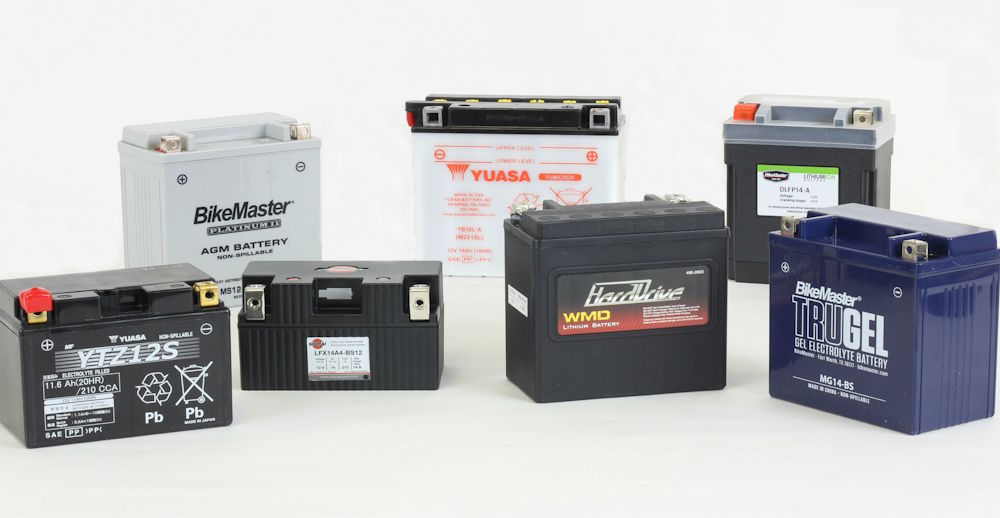
Motorcycle batteries are often only remembered when the bike refuses to start in the morning. However, a battery is far more than just a box under the seat – it directly affects starting reliability, electronic system stability, and how many nerves you save at the beginning of the riding season. In this guide, I’ll clearly and concisely cover the 10 most important technical aspects to help you choose the right battery and avoid the most common mistakes.
Why is the battery so important in a motorcycle?
A motorcycle battery performs three key functions: it starts the engine, supplies additional current when the alternator can’t keep up, and stabilizes voltage in the motorcycle’s electrical system. In simple terms, even the most powerful motorcycle can turn into a very nice piece of metal if the battery is weak.
10 technical aspects to consider when choosing a battery
1. Battery type
In most cases, you’ll encounter four options: traditional flooded lead-acid, AGM, GEL, and lithium (most commonly LiFePO4).
In practice, most modern motorcycles use AGM motorcycle batteries , as they are sealed, vibration-resistant, and can be installed in various positions. GEL batteries are less common, while lithium batteries attract riders with lower weight and high performance, but require closer attention to charging system compatibility.
2. Voltage and number of cells
A standard motorcycle battery is rated at “12V,” which means it consists of six cells producing approximately 12.7 V in total. Some older motorcycles still use 6V systems, but these are now quite rare.
3. Capacity (Ah)
Ah (ampere-hours) indicates how much energy the battery can store. The more electronics your motorcycle has (ABS, heated grips, auxiliary lights), the more important it is to stick to the manufacturer’s recommended capacity rather than trying to save money by going smaller.
4. Cold Cranking Amps (CCA)
CCA is especially important in colder conditions, as it shows how much current the battery can deliver during engine start. Modern motorcycles with higher electrical demand generally perform better with a higher CCA rating.
5. Dimensions
It sounds simple, but mistakes here are common. The battery must fit perfectly in the original compartment, as a loose battery suffers from vibrations, which can significantly shorten its service life.
6. Polarity and terminal layout
Different models use different positive and negative terminal layouts. If you choose the wrong configuration, the cables may not reach the terminals or will be under tension – creating a risk for both the electrical system and the battery itself.
7. Charging system compatibility
This is one of the most important yet often overlooked points. When switching to AGM, it’s worth ensuring that the motorcycle’s charging system provides a regulated output of approximately 14.0–14.8 V. Older motorcycles sometimes have lower charging parameters, which may not be suitable for modern battery technologies.
8. Self-discharge and off-season storage
Even when the motorcycle is switched off, it slowly consumes energy. AGM batteries typically have a lower self-discharge rate than traditional lead-acid batteries, making them more convenient for winter storage.
9. Sulfation and deep discharge damage
A battery left deeply discharged begins to sulfate – compounds form on the plates, reducing the active surface area and eventually causing irreversible damage. For this reason, preventive maintenance charging is far better than trying to revive a completely dead battery.
10. Temperature and real-world conditions
Cold temperatures reduce starting power, while heat accelerates aging. Additionally, the electrolyte in deeply discharged lead-acid batteries can even freeze.
How to maintain a motorcycle battery?
The simplest test is measuring voltage with a multimeter. A healthy, fully charged 12V battery should read around 12.6 V. If the voltage drops toward 12.0 V, there may no longer be enough power for reliable starting.
During winter or extended periods of inactivity, it’s recommended to use a smart maintenance charger , especially if the motorcycle is equipped with an alarm or other constant power consumers.
When is it time to replace the battery?
Even well-maintained batteries don’t last forever. On average, motorcycle batteries last around 3–5 years, though harsh conditions or poor maintenance can shorten this lifespan.
If you notice slow cranking, frequent need for recharging, or physical damage (swelling, corrosion), it’s most likely time for a new battery.