 Clothing
 Motorcycle parts
 Scooter / Chinese ATV parts
 Mini car parts
 Water transport parts
 Bicycle / Kick scooter parts
 Accessories
 Liquids
 Motorcycle tyres
 Service / Maintenance equipment
 Gift coupons
 Clothing rental
 Sale
Sale
 lt
lt en
en

 Search by model


The motorcycle drivetrain is one of the most critical systems ensuring smooth power transfer to the rear wheel. Among all components, the chain endures the greatest stress — it is constantly exposed to dirt, moisture, sand, and mechanical friction. That’s why many riders ask: how long does a chain really last, and how can you extend its lifespan?
Proper maintenance, regular use of chain lubricant, and correct chain tension can make a significant difference. A neglected chain may wear out within a single season, while a well-maintained one can last tens of thousands of kilometers.
How many kilometers does a motorcycle chain last?
On average, a quality motorcycle chain lasts between 15,000 and 30,000 km, but this figure can vary greatly depending on riding conditions and maintenance. Riding in rain, mud, or dusty environments accelerates wear because debris acts as an abrasive.
Regular cleaning and lubrication reduce friction and protect the metal from corrosion. Riders who invest time in maintenance often enjoy a significantly longer chain lifespan.
How to tell when a chain is worn out?
The first sign is uneven chain tension. If, when rotating the wheel, you notice spots where the chain becomes looser or tighter, this indicates uneven wear.
Other warning signs include:
- Frequent need for tension adjustment;
- Noise or vibration while riding;
- Sprocket teeth becoming sharp or hook-shaped;
- The chain appearing stretched.
Ignoring these signs may damage sprockets or even lead to chain failure.
Chain lubricant — essential for longevity
Chain lubricant performs several crucial functions: it reduces friction, protects against corrosion, and helps remove contaminants. Lubrication should be done every 400–700 km or after riding in the rain.
It is best to lubricate the chain after a ride while it is still warm — this allows the lubricant to penetrate the seals more effectively. Always use products specifically designed for motorcycle chains, as general-purpose lubricants do not provide adequate protection.
Cleaning the chain — a step you shouldn’t skip
Before lubricating, the chain should be cleaned. Dirt, sand, and old lubricant residue create an abrasive layer that accelerates wear.
Use dedicated cleaners and a soft brush. Avoid aggressive chemicals or high-pressure water, as these can damage the seals.
Proper chain tension — more than comfort
Correct chain tension is essential for safe and smooth riding. A chain that is too loose may slip off the sprockets, while one that is too tight places extra stress on the drivetrain.
Manufacturers specify optimal slack, typically around 20–30 mm. Measure it with the motorcycle on its side or center stand, following your model’s manual.

Riding style and chain lifespan
Aggressive acceleration, frequent wheelies, or riding with a passenger increase stress on the chain. Smooth riding and gentle gear changes help maintain its condition for longer.
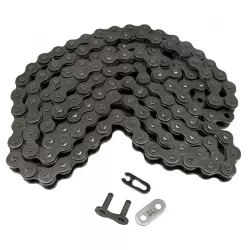
It is also important to inspect sprockets regularly. Chains and sprockets wear together, which is why replacing the full set is typically recommended.
How to extend chain service life?
To maximize chain longevity:
- Clean and lubricate the chain regularly;
- After riding in rain or mud, clean and relubricate it;
- Check chain tension every few hundred kilometers;
- Avoid aggressive cleaning chemicals;
- Replace the chain together with sprockets.
Spending just a few minutes on maintenance can prevent costly repairs and ensure smooth, reliable riding.
Conclusion
The motorcycle chain is a consumable component, but its lifespan largely depends on maintenance. Regular chain lubrication, proper chain tension, and cleanliness can double its service life.
A well-maintained chain means not only longevity but also safer and smoother riding. Give it the attention it deserves — and it will reliably serve you for thousands of kilometers.