 Clothing
 Motorcycle parts
 Scooter / Chinese ATV parts
 Mini car parts
 Water transport parts
 Bicycle / Kick scooter parts
 Accessories
 Liquids
 Motorcycle tyres
 Service / Maintenance equipment
 Gift coupons
 Clothing rental
 Sale
Sale
 lt
lt en
en

 Search by model


When it comes to choosing a motorcycle helmet, many people have questions: what's the right size? How can I tell if a helmet fits my head shape? While looks are important, safety and proper fit must come first. A poorly chosen helmet may not protect you in an accident, and constant discomfort can ruin the pleasure of your ride.
In this article, we'll provide essential tips to help you choose a helmet that's a perfect fit for both your head size and shape.
Step One: Measure Your Head Circumference
Before you dive into the wide variety of helmets, you need to take one crucial step: measure your head circumference. While it sounds simple, an accurate measurement is the key to choosing the correct size.
How to do it?
- Use a flexible tailor’s tape to wrap horizontally around the widest part of your head.
- This is typically about 1 inch (2.5 cm) above your eyebrows.
- Make sure the tape is snug, but not too tight, against your head.
- We recommend measuring at least twice to ensure accuracy.
Write down your measurement in centimeters or inches—this will make it easy to compare with manufacturers' size charts.
Important tip: Remember that different manufacturers’ size charts may vary slightly. Always rely on the specific size chart for the helmet you are considering. If your measurement falls between two sizes, it's usually best to choose the smaller one for a snug but comfortable fit.
Step Two: Consider Your Head Shape
Head circumference is only half the battle. For a helmet to be truly comfortable and safe, you must also consider your head shape. The interior padding of a helmet is often designed for a specific head shape, not just its exterior appearance.
Most manufacturers distinguish between three main shapes:
- Round Oval: fits heads where the front-to-back and side-to-side measurements are roughly the same.
- Intermediate Oval: designed for heads that are slightly longer than they are wide. This is the most popular and common shape.
- Long Oval: made for heads that are noticeably longer and narrower.
When choosing a helmet, look for information about its internal shape, which is often specified by the manufacturer. Don't let the helmet's exterior shape fool you—an outwardly round helmet might have padding designed for a narrower head.
Step Three: Check the Retention System
The right helmet size and shape are useless if the helmet isn't secured properly. Every helmet has a special retention system consisting of chin and neck straps. Their purpose is to ensure the helmet stays in place during sudden movements and, most importantly, in a crash.
When you choose a helmet based on the correct size and shape, you typically don't need to worry about the strap length—they are adjustable and designed to fit that particular helmet size.
What Else Is Important to Know?
Riding Position. Your riding style also influences your helmet choice. For example, helmets designed for sport bikes, which require a tucked riding position, offer a better viewing angle in the upper eye area and are more aerodynamic to reduce drag at high speeds. In contrast, helmets for cruiser or touring bikes focus on maximizing visibility and ventilation for a more upright riding position.
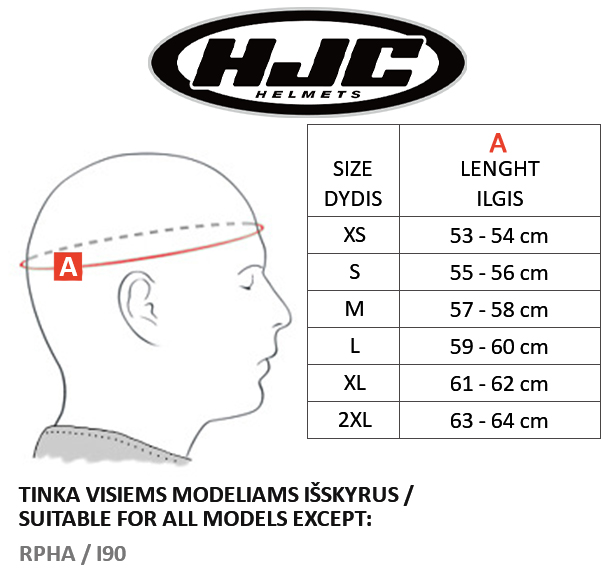
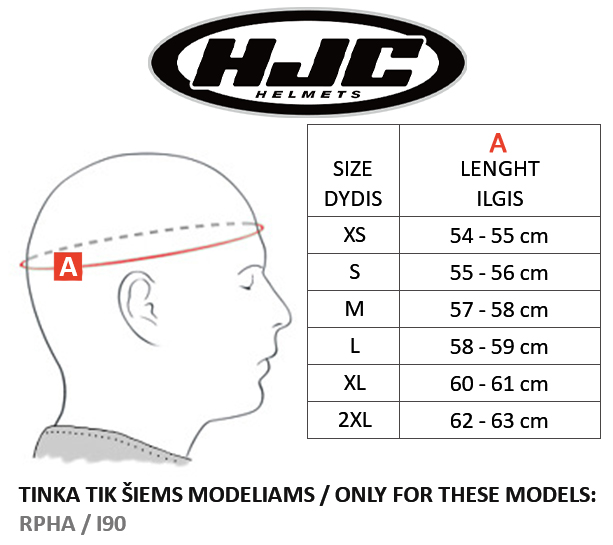
Popular Motorcycle Helmet Size Charts
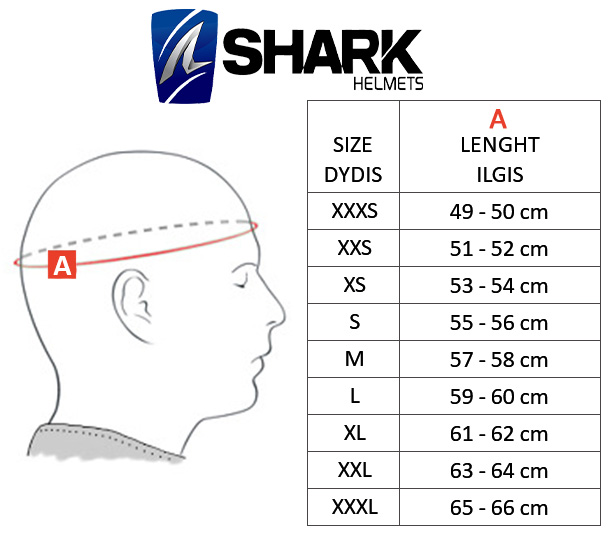
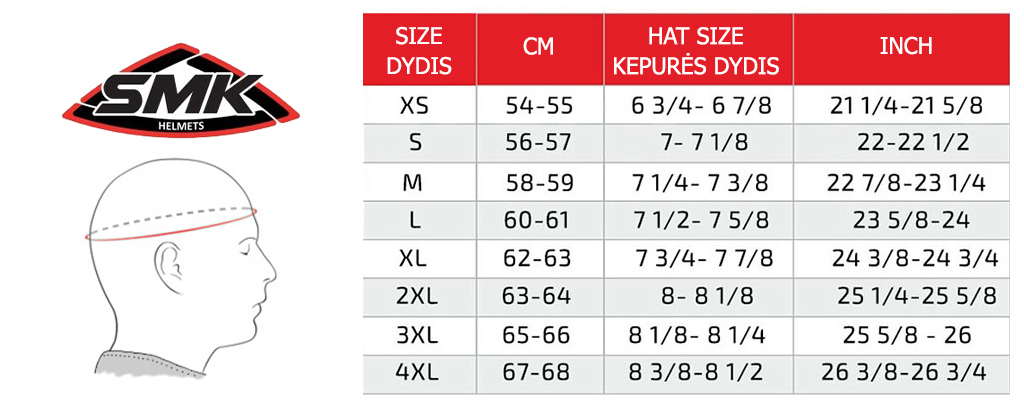
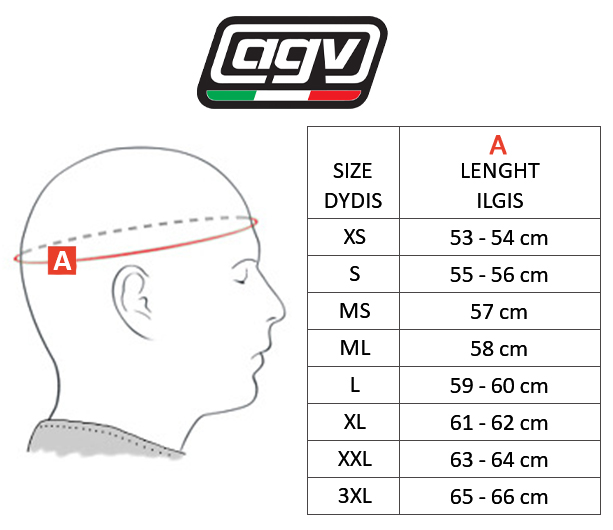
While many motorcycle helmets have similar internal dimensions, it's important to note that some manufacturers use a slightly different sizing system. For instance, SMK helmets have unique internal measurements. Therefore, when choosing a helmet, always rely on the specific size chart provided by the manufacturer.
SHARK Helmet Size Chart
SMK Helmet Size Chart
AGV Helmet Size Chart
HJC Helmet Size Chart